The Gentle Start: Best Camping Starter Kit for Beginners (2026)

Updated: 4 days ago
By Chris | Field tested by Life Gear Lab
The best camping starter kit UK for beginners does not have to cost a fortune. This guide picks five proven setups that give you everything you need without the guesswork.
Kitting out your first camping trip? Grab my free UK Camper's Power Guide from the sign-up form at the bottom of the Life Gear Lab homepage.
How this was tested: I tested this camping starter kit across beginner-level UK camping trips in real outdoor conditions. Here is what I found.
The most important piece of camping gear isn't a titanium stove or a high-tech tent; it's the quiet confidence that you'll actually sleep through the night. It's completely normal to feel overwhelmed by the sheer volume of equipment lists that look more like survivalist manifestos than a relaxed weekend getaway. You might worry about the cold or feel anxious about setting up complex gear in the fading light. We understand that for the 49 percent of people camping to improve their mental health in 2026, the goal is restoration, not a test of endurance. Finding the best camping starter kit for beginners should feel like preparing a sanctuary, not passing a survival test.
This guide shifts the focus from rugged survival to domestic ease. We'll show you how to assemble a curated ecosystem of comfort by prioritising a few high-quality, intuitive items that create a true home away from home. You'll learn how to build a low-stress setup that guarantees warmth, reliable light, and stability. We're moving away from cluttered lists and toward a thoughtful, kit-based system that lets you focus on the rustle of the trees rather than the instructions on a box.
Table of Contents
The Core Four Essentials for Your First Night Under the Stars
Beyond the Basics: Power and Connectivity for Modern Comfort
Shelter Upgrades: The Best Rooftop Tents for UK Campers and Anglers
The Philosophy of a Minimalist Camping Starter Kit
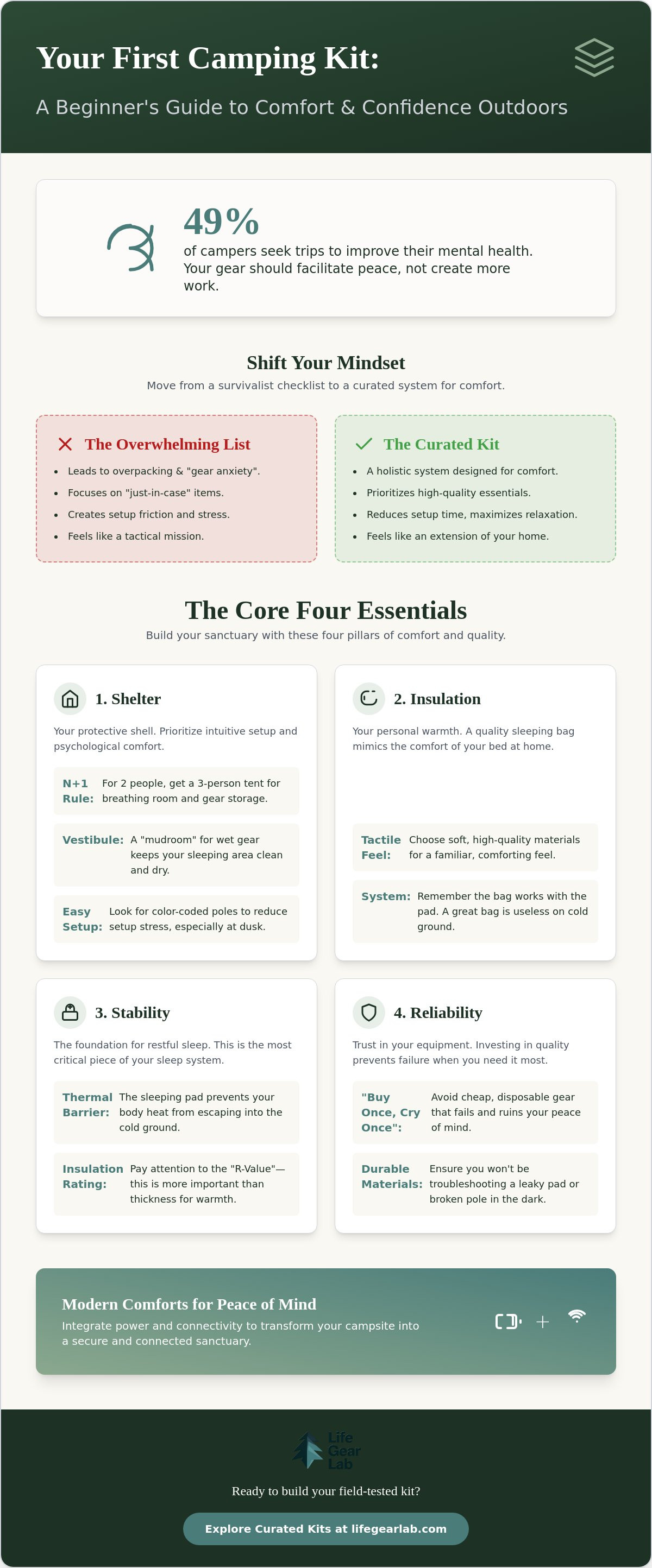
Stepping into the woods shouldn't feel like a tactical mission. For many, the primary hurdle isn't the distance to the trailhead but the weight of the expectations we carry. We believe in a "Gentle Start." This approach views outdoor exploration as an extension of home rather than a battle against the elements. When you seek out the best camping starter kit for beginners, you aren't just buying tools. You're designing a low-stress environment where you can actually relax. Since 49 per cent of campers in 2026 report booking trips specifically to improve their mental health, the gear you choose should facilitate peace, not create more work.
There is a fundamental difference between a gear list and a curated kit. A list is a collection of parts; a kit is a holistic system. Lists often lead to overpacking and "gear anxiety," where the sheer volume of items makes the logistics feel insurmountable. By choosing a minimalist kit, you reduce setup friction. You spend less time wrestling with tent poles and more time enjoying the stillness. To truly appreciate this transition, it helps to learn about the history of camping and how it has evolved from a necessity into a deliberate pursuit of tranquillity.
Prioritising Calm Over Ruggedness
Most outdoor marketing focuses on "ruggedness" and "survival." This mindset can be incredibly intimidating for someone just starting. Our philosophy prioritises domestic comfort. We want your first night under the stars to feel safe and familiar. This means choosing gear that feels soft to the touch, provides warm light, and offers stable support. When your equipment mimics the comforts of home, your brain can stop scanning for threats and start soaking in the scenery. It's about creating a sanctuary in the wild. It's about safety.
The "Buy Once, Cry Once" Rule for Beginners
It's tempting to grab the cheapest options from a big-box retailer. However, this often leads to the "disposable gear" trap. Cheap equipment is frequently heavy, difficult to assemble, and prone to failure at the worst moments. A tent that leaks or a sleeping pad that deflates doesn't just cost money; it costs you your peace of mind. Investing in the best camping starter kit for beginners means identifying the "Core Four" items where quality matters most.
Shelter: A tent with intuitive, colour-coded poles reduces setup stress.
Insulation: High-quality sleeping bags offer a softness that mirrors your bed at home.
Stability: Reliable sleeping pads provide the physical foundation for a restful night.
Reliability: Durable materials ensure you won't be troubleshooting gear in the dark.
Buying better allows you to buy less. This creates a more grounded experience where you trust your equipment completely. When you aren't worried about your gear, you're free to enjoy the environment.
The Core Four Essentials for Your First Night Under the Stars
Transitioning from a philosophy of calm to the physical reality of a campsite requires a methodical selection of gear. We view the best camping starter kit for beginners as a quartet of essential systems. These are not just items on a list; they are the pillars of your outdoor sanctuary. When these four elements work together, they eliminate the most common beginner fears: being cold, sleeping poorly, and feeling disorganised in the dark.
Shelter That Breathes and Protects
A tent should feel like a protective shell, not a restrictive box. For beginners, the psychological comfort of space is just as important as weather protection. We recommend the "N+1" rule. If you're camping as a duo, choose a three-person tent. This extra breathing room allows you to keep your bags inside without feeling cramped. Look for a model with a generous vestibule. This external mudroom keeps wet shoes and gear outside the sleeping area, maintaining a clean and dry interior. Prioritise tents with colour-coded poles to simplify your first setup. For more practical advice on your first outing, you can review these first-time tent camping tips from Recreation.gov.
The Sleep System: Your Foundation of Peace
Many beginners mistakenly believe the sleeping bag does all the work. In reality, the sleeping pad is the most critical component. It provides the thermal barrier between your body and the cold ground. Without a pad with a proper insulation rating, even the thickest bag will lose heat to the earth. When selecting a bag, look for a comfort rating rather than a limit rating. You want a bag that keeps you cosy, not just one that ensures survival. Don't forget the sensory details. Bringing a dedicated camping pillow rather than a rolled-up jacket provides the familiar softness of home. You can find detailed evaluations of these integrated systems in our field-tested gear reviews.
Lighting and organisation complete the experience. Avoid the harsh, clinical glare of high-lumen tactical flashlights. Instead, choose lanterns that cast a warm, amber glow to create a domestic ambience. Organisation is equally vital for tranquillity. Use simple, stackable bins to keep your kitchen and utility items separate. This prevents the clutter anxiety that occurs when you can't find a headlamp or a lighter in the fading light. By treating these four essentials as a cohesive kit, you ensure your first night is defined by quiet reflection rather than logistical stress.
Evaluating Quality vs. Complexity: How to Buy Better
In the world of outdoor gear, price is often equated with technical complexity. Manufacturers frequently add features that sound impressive in a showroom but become liabilities in the field. As your minimalist mentor, we suggest a different metric: reliability through simplicity. The best camping starter kit for beginners isn't the one with the most buttons or moving parts. It's the one that requires the least amount of "figuring out" when you're tired, and the sun is setting. Choosing gear with an intuitive design is the most effective way to lower your stress levels before you even leave your driveway.
Simplicity as a Safety Feature
Safety in the outdoors is often a byproduct of simplicity. When a piece of equipment has fewer failure points, it's inherently more reliable. For example, a tent with two sturdy, thick poles is far easier to manage than an over-engineered structure with a complex hub system. If a pole breaks or a clip snaps on a complicated rig, your shelter is compromised. Manual gear almost always beats high-tech gadgets for first-time campers. A simple, click-to-start propane stove offers a predictable experience that a multi-fuel survival stove cannot match. When planning your logistics, consulting a National Park Service camping guide provides an excellent framework for why basic, reliable equipment is the backbone of a safe trip.
Material Matters: Softness Meets Durability
We believe that "rugged" shouldn't mean "rough." The materials in your kit should provide a sensory bridge to the comforts of home. Many ultra-lightweight items use thin, crinkly plastics that sound like a bag of chips every time you move. This is the opposite of a tranquil experience. Instead, look for heavy-duty materials that offer a sense of grounded stability. Thicker tent floors and quiet, brushed-fabric sleeping pads create a much more domestic atmosphere. While these items might be slightly heavier, they are also more durable. Ripstop fabrics and high waterproof ratings offer peace of mind during a midnight rain shower. You aren't just buying gear; you're buying the assurance that you'll stay dry and warm. Using field-tested reviews allows you to filter out the noise and find the items that balance these technical specs with actual lived comfort.
Shelter Upgrades: The Best Rooftop Tents for UK Campers and Anglers
Once you have mastered the basics, a rooftop tent is the ultimate shelter upgrade for UK wild campers and bankside anglers. No groundsheet, no pegs, set up in under three minutes.
We have reviewed the best option available in the UK right now. Read our full Chaopaodi Apolle TNT 2.0 Rooftop Tent Review here. 👈
Looking for the perfect sleeping pad for your starter kit? Read our full Yuzonc Camping Sleeping Pad review here.
Beyond the Basics: Power and Connectivity for Modern Comfort
Many traditional guides suggest that true camping requires a total digital disconnect. We believe this perspective ignores the psychological safety that modern technology provides. For a beginner, a dead phone battery isn't a symbol of freedom; it's often a source of profound anxiety. Integrating a reliable source of electricity into the best camping starter kit for beginners is about maintaining an emotional safety net. It ensures you can check the weather, navigate unfamiliar trails, and stay in touch with the world if needed. Power is a tool for peace of mind.
Choosing a Reliable Portable Power Station
You don't need a massive unit designed for an off-grid van expedition. For a standard weekend trip, a station with a capacity of 250 to 500 Watt-hours (Wh) is usually the "calm" sweet spot. This provides enough energy to charge phones multiple times, power a small lantern, and even run a portable fan for better sleep. Voltage stability is a critical feature to look for. It ensures that your sensitive electronics, like tablets or cameras, charge safely without risk of damage. A stable power supply prevents the "battery anxiety" that can distract you from the quiet beauty of the forest. It allows you to focus on the environment rather than your battery percentage.
The Connected Campsite: Safety and Serenity
Connectivity serves as a bridge between the unknown and the familiar. Using offline maps and weather apps reduces the logistical stress of navigating new terrain in 2026. If a sudden rainstorm keeps you inside your tent, the ability to stream a movie or listen to a podcast can turn a potentially frustrating moment into a cozy one. It's about intentionality. You can use technology to enhance your safety and comfort without letting it dominate your time in nature. Having the option to connect lowers the barrier to entry for those who feel nervous about being completely "unplugged."
This digital safety net allows you to explore further with confidence. When you know you can find your way back or call for assistance, the woods feel less like a maze and more like a sanctuary. It’s not about being "online" all the time; it’s about having the choice. By integrating these tools thoughtfully, you create a kit that supports your transition into outdoor life. This approach respects the traditional "off-grid" experience while acknowledging the realities of modern comfort. For deeper insights into selecting these modern essentials, explore our Van Life and Tech Guides to find field-tested recommendations that prioritize ease of use.
Building Your Field-Tested Kit with Life Gear Lab
Assembling your first kit is an exercise in filtering. The outdoor industry often presents a wall of noise, filled with technical specs and survivalist imagery that can make a simple weekend trip feel like a daunting expedition. We act as your thoughtful curator, testing every item to ensure it meets our standards for peace of mind. By following a structured, modular approach, you can build the best camping starter kit for beginners without the logistical stress. You don't need everything at once. You only need the right things.
Step-by-Step Kit Assembly
Building your setup in stages allows you to focus on quality over quantity. This methodical progression ensures each piece of gear serves a clear purpose in your sanctuary.
Step 1: Secure your forest home. Choose a tent that prioritizes intuitive assembly. Look for color-coded poles and a rainfly that provides full coverage. This is your foundation of safety.
Step 2: Build your cloud. Focus on the synergy between your sleeping pad and bag. A high-quality pad provides the thermal barrier you need for a restful night. It's the most important investment for physical restoration.
Step 3: Master the light and power. Integrate a portable power station and warm-toned lanterns. These tools maintain your digital safety net and create a domestic ambiance that makes the woods feel like home.
Step 4: Curate the kitchen. Keep your cookware simple. A single-burner stove and a nesting pot set are all you need for your first few trips. Complex kitchen setups often lead to unnecessary clutter.
Step 5: The final check. Before you depart, perform a "dry run" in your living room or backyard. Familiarity with your gear is the ultimate antidote to setup anxiety.
The Life Gear Lab Promise
Our philosophy is rooted in the "buy once, cry once" principle. While the initial investment in quality gear might seem higher, it saves you money and frustration over the long term. Durable, well-designed equipment doesn't end up in a landfill after a single season; it becomes a reliable companion for years of exploration. We've done the exhausting work of filtering through thousands of products so you don't have to. Our field-tested recommendations are designed to lower the barrier for beginners, providing a clear path to a tranquil outdoor experience.
Transitioning from a first-timer to a seasoned camper happens naturally when you have a kit that grows with you. As you gain confidence, you can add modular components to your setup without replacing your core essentials. This intentionality is what transforms a simple gear list into a lifelong pursuit of peace. To begin your journey with a setup that prioritizes your well-being, Explore our curated Camping Starter Kits and discover the difference that thoughtful curation makes.
Your Sanctuary Under the Stars
Embracing the outdoors doesn't require you to sacrifice the safety and comfort of home. By shifting your mindset from survival to restoration, you've already taken the most important step toward a successful first trip. We've explored how a minimalist philosophy reduces logistical stress and why prioritizing a high-quality sleep system is the foundation of a tranquil experience. Remember that integrating reliable power and connectivity isn't a luxury; it's a tool that provides the emotional safety net needed to truly relax in 2026.
Assembling the best camping starter kit for beginners is about choosing a few durable, intuitive items that you can trust completely. Our minimalist mentors have already performed the exhausting work of testing and filtering to provide reader-supported, honest reviews. We focus on durability and simplicity so you can focus on the quiet beauty of nature. If you're ready to build your own low-stress setup, View our field-tested beginner camping kits. Nature is waiting for you, and it's much closer than you think.
Frequently Asked Questions
What is the most important item in a camping starter kit?
The sleeping pad is the most critical component of your setup. While many beginners focus on the tent, the pad provides the essential thermal barrier between your body and the cold ground. Without proper insulation beneath you, even the most expensive sleeping bag will lose heat to the earth, leading to a restless and chilly night.
How much should a beginner spend on their first camping kit?
A functional beginner setup can be assembled for under $200 if you choose budget-friendly options. For those seeking a mid-range kit with better durability and comfort, the average cost typically ranges from $400 to $800. Investing in quality "Core Four" items early on prevents the need to replace cheap, failing gear after just one trip.
Can I use regular blankets instead of a sleeping bag for my first trip?
You can use home blankets if the nighttime temperature remains consistently above 65 degrees Fahrenheit. However, sleeping bags are specifically designed to trap body heat in a compact space and offer a sense of security that loose blankets lack. For a truly tranquil experience, a dedicated bag provides the reliable warmth and softness needed for deep sleep.
Is it worth buying a portable power station for a one-night trip?
Yes, a portable power station is worth the investment because it eliminates "battery anxiety" and serves as a safety net. Having a reliable source of electricity for your phone and lighting ensures you can navigate trails or check weather updates without stress. It transforms your campsite into a more secure and connected sanctuary, regardless of the trip length.
How do I know if a tent is actually "easy to set up"?
Look for a freestanding design that utilizes color-coded poles and a simple two-pole X-shaped structure. These features make the assembly process intuitive and reduce the risk of mistakes in the fading light. If a tent requires a complex sequence of hubs and tensioners, it probably isn't the best camping starter kit for beginners looking for a low-stress start.
What are the "must-have" items for cooking while camping?
Focus on a single-burner propane stove, a reliable lighter, and a nesting pot set. These three items allow you to prepare simple, comforting meals without the clutter of a full kitchen. A basic cooler is also essential to keep your ingredients fresh and safe until you're ready to cook.
How do I stay warm during my first night in a tent?
Thermal insulation starts from the ground up, so ensure your sleeping pad offers a high level of stability and warmth. Always change into a set of completely dry clothes specifically for sleeping; even a small amount of moisture from daytime sweat can make you feel cold as the temperature drops. Adding a dedicated camping pillow also helps maintain your body's natural heat.
Should I buy a kit or build one piece by piece?
Building your setup piece by piece allows for a more curated experience that matches your personal comfort preferences. However, starting with the best camping starter kit for beginners helps you avoid the decision fatigue that comes with filtering thousands of individual products. A pre-selected kit provides a balanced, field-tested foundation that you can modularly expand as you become a seasoned camper.
For a comfortable night's sleep without breaking the budget, read our full Yuzonc camping sleeping pad review — one of the best value options for UK campers right now.
The best time to build your kit on a budget is during a sale. Check out the Fishing Tackle and Bait Summer Sale 2026 with up to 70% off rods, reels and tackle.
If you also enjoy hiking and trail days, see our guide on how to pack a hiking backpack UK — the same principles of weight distribution apply whether you are heading to the bank or the hills.


Comments